
Why Gutters Are Important and What Happens When They Stop Working Properly
Gutters do a simple job, but that job affects much more than the edge of your roof. When they are working properly, they collect rainwater and direct it toward downspouts so it can be discharged away from the house. When they become clogged, damaged, poorly positioned, or unable to handle the amount of water coming off the roof, that water has to go somewhere else.
Often, it ends up exactly where you do not want it.
Water may spill over the sides of the gutters, run down the siding, collect around the foundation, or wash away soil near the house. Over time, what starts as a gutter problem can contribute to damaged fascia, exterior staining, landscape erosion, and moisture problems around the basement or foundation.
Understanding these connections makes it easier to recognize gutter problems before they turn into larger exterior repairs.
What Gutters Are Actually Supposed to Do
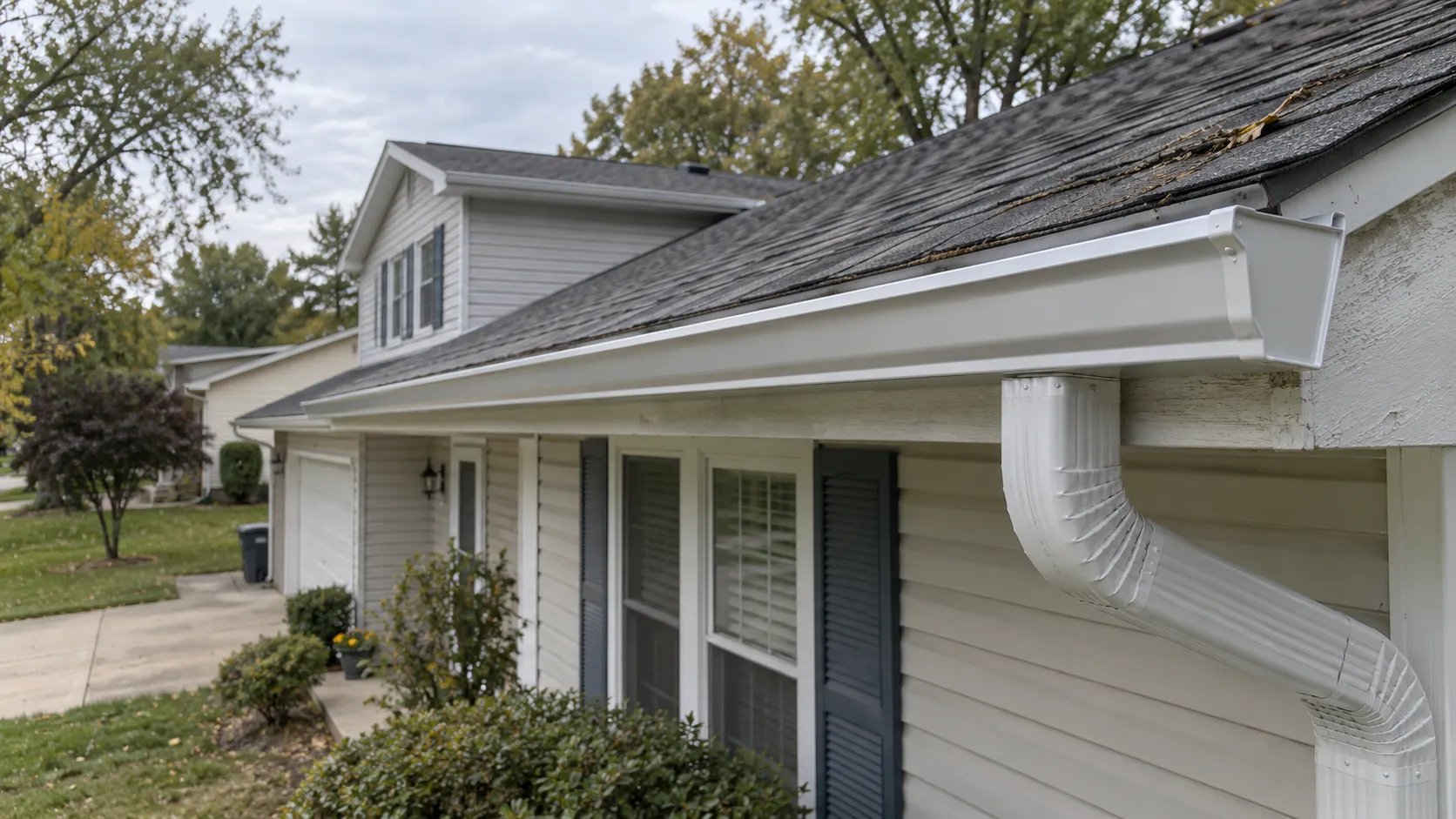
A gutter system is designed to control rainwater coming off the roof. Instead of allowing water to fall directly along the perimeter of the house, gutters collect it and guide it toward downspouts.
The downspouts then carry that water toward an appropriate drainage area away from the foundation.
This process may seem straightforward, but the system depends on several components working together. Gutters need enough capacity for the roof area they serve, the correct slope to move water toward the downspouts, secure connections, and clear openings that allow water to flow freely.
A problem with any of these elements can change where rainwater ends up.
That is why a gutter that looks fine from the ground can still have a drainage problem during a heavy storm.
What Happens When Gutters Overflow
Overflow is one of the most obvious signs that a gutter system is not handling water correctly. During rainfall, water may pour over the front or back edge instead of staying inside the gutter and moving toward the downspout.
A clogged gutter is one possible cause, but it is not the only one. Overflow can also happen when gutters are improperly sloped, damaged, undersized for the roof area, or paired with downspouts that cannot move water away efficiently.
The important issue is what happens to that excess water after it leaves the gutter.
Water Starts Running Down the Siding
When water repeatedly spills over the edge of a gutter, it can run down the exterior wall instead of following a controlled drainage path.
Over time, this can leave visible water streaks and stains on siding. Areas that stay wet repeatedly may also experience deterioration depending on the siding material and the condition of the surrounding components.
The problem is not necessarily one heavy rainfall. Repeated exposure is what can make a small drainage issue more noticeable over time.
Water Can Damage the Fascia and Soffit
The fascia sits directly behind the gutter, which means it can be exposed when water is not staying where it should.
Persistent moisture around the roof edge can contribute to deterioration, especially if the fascia is already vulnerable because of age, damaged paint, poor drainage, or previous water exposure.
In some cases, homeowners first notice the problem when they see staining, peeling paint, soft wood, or a gutter section beginning to pull away from the roofline.
Overflow Can Erode the Soil Around Your Home
Rainwater falling from a roof or overflowing gutter does not simply disappear when it reaches the ground.
If large amounts of water repeatedly hit the same area, the soil can gradually be displaced. This may create small channels, bare patches, depressions, or areas where mulch and landscaping material have been washed away.
Soil erosion becomes particularly noticeable below gutter sections that overflow or around downspouts that discharge too close to the house.
Once the soil surface changes, water may begin following a different path during future storms, potentially keeping certain areas around the home wetter than intended.
How Gutter Problems Can Lead to Foundation Moisture
One of the biggest reasons gutter drainage matters is the relationship between roof runoff and the ground around the foundation.
Every rainfall sends a significant amount of water onto the roof. Without effective drainage, that water can collect directly beside the house.
If the ground around the foundation repeatedly receives concentrated amounts of water, the area can remain wet for longer periods. Depending on the home’s grading, soil conditions, drainage system, and other factors, this can increase the potential for moisture to reach foundation walls.
This does not mean every overflowing gutter will cause a foundation problem. However, consistently directing roof runoff toward the foundation is a drainage issue worth addressing.
Why Basement Moisture Can Start Outside the House
When homeowners discover moisture in a basement, they often look for a problem inside the basement itself.
But the source can sometimes begin outside.
Water that is not being properly directed away from the home can accumulate around the foundation. If exterior drainage is inadequate, moisture may eventually find a way into vulnerable areas through cracks, joints, porous materials, or other pathways.
Gutters are only one part of the overall drainage system, so they are not automatically the cause of basement moisture. Still, properly managed roof runoff is an important part of reducing unnecessary water accumulation around the foundation.
That is why checking the gutters and downspouts can be a useful part of investigating recurring moisture after heavy rain.
Signs Your Gutters May Not Be Working Properly
Some gutter problems are easy to spot, while others only become obvious during or immediately after rainfall.
Watch for signs such as:
- Water spilling over the sides during rain
- Water stains or streaks on the siding
- Peeling or damaged paint near the roofline
- Sagging gutter sections
- Gutters pulling away from the fascia
- Standing water inside the gutters
- Soil washing away below downspouts
- Puddles forming close to the house
- Mulch or landscaping material repeatedly being displaced
- Damp areas near the foundation
- Basement moisture that appears after heavy rainfall
- Visible cracks, separation, or damage in gutter sections
One isolated issue does not necessarily mean the entire gutter system needs to be replaced. The cause matters.
Why Clogged Gutters Are Not the Only Problem
Leaves, twigs, and other debris are common causes of gutter blockages, but cleaning is not always the complete solution.
A gutter can be relatively clean and still drain poorly.
Incorrect slope can prevent water from moving efficiently toward the downspout. Loose fasteners can cause sections to sag. Damaged seams may allow water to escape. A downspout may be partially blocked or positioned in a way that leaves water too close to the foundation.
There can also be capacity issues. A gutter system needs to handle the amount of runoff generated by the roof, particularly during periods of heavy rainfall.
This is why simply removing visible debris may not solve recurring overflow.
Small Gutter Problems Can Become Bigger Exterior Repairs
A gutter issue may not seem urgent when the only symptom is a small amount of overflow.
But repeated water exposure can affect several parts of the property at once.
Water may stain siding, contribute to fascia deterioration, wash away soil, disturb landscaping, and increase moisture around the foundation. These problems do not necessarily happen overnight. They can develop gradually, making it easy to overlook the original drainage issue.
Addressing the cause early can help prevent a minor gutter problem from becoming part of a much larger exterior maintenance project.
When Cleaning Is Enough and When Gutters May Need Repairs
Not every gutter problem requires replacement.
If debris is blocking the flow, a thorough cleaning may be enough to restore normal drainage. If a section has become loose, it may need to be secured. A downspout may need adjustment if it is not directing water far enough away from the house.
Other situations may require more extensive repairs. Sections that are severely damaged, repeatedly separating, badly sagging, or no longer functioning properly may need to be replaced.
The goal is to identify what is actually preventing the system from managing water effectively rather than assuming that every drainage problem requires a completely new gutter system.
How Proper Gutter Drainage Protects More Than Your Roof
Gutters are often treated as a small exterior detail, but their role extends well beyond the roofline.
They help control where rainwater goes after it leaves the roof. That affects the siding below the roof edge, the fascia behind the gutters, the soil around the house, the landscaping, and the area surrounding the foundation.
When gutters stop working properly, the warning signs may appear in several different places. Overflow during a storm, unexplained soil erosion, water staining, damaged fascia, or recurring moisture around the foundation can all be reasons to take a closer look at the drainage system.
A functioning gutter system cannot prevent every moisture or foundation problem, but it can help keep roof runoff on a controlled path instead of allowing it to repeatedly collect where it can cause trouble.
